
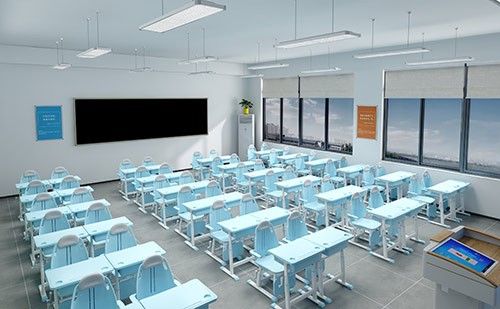
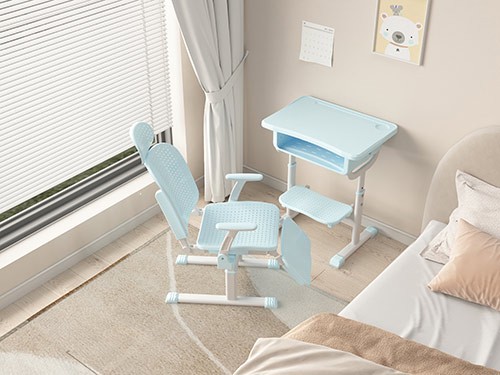





At Sanhe Primary School in Zhaojue County, Liangshan City, Sichuan Province, the mountain breeze at an altitude of 2,000 meters sweeps over the brand-new adjustable desks. The steel seal of "Made in Nancheng" on the desktop quietly tells of the craftsmanship thousands of miles away. In classrooms in Kashgar, Xinjiang, smart blackboards are simultaneously displaying courses taught by renowned teachers from Beijing. These devices that have transformed the learning experiences of millions of urban and rural students all come from a seemingly ordinary county in the heart of Jiangxi Province - Nancheng. Little known is that one out of every three student desks and chairs across the country carries the genes of Nancheng.
This agricultural county, which is neither coastal nor border and lacks a traditional industrial foundation, how can it capture 35% of the national school furniture market share, with an annual shipment of over 20 million sets of desks and chairs, and truly become the "School Capital of China"?
From sawdust flying to the light of "intelligent manufacturing"
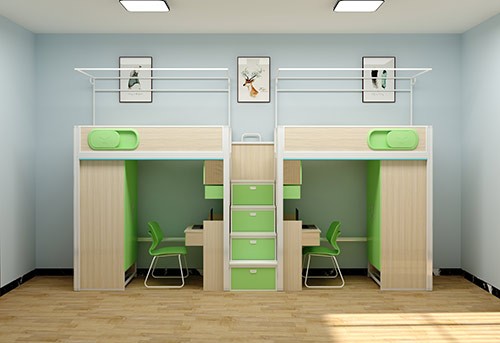
School furniture generally refers to the tools, furniture and other items used in school teaching and students' learning. Common teaching auxiliary tools such as desks and chairs, podiums and bookshelves all fall within the category of school furniture. Its main function is to provide support and guarantee for the teaching activities of the school and the study and life of students. Different types of school furniture have their own focuses in terms of functions and uses, and jointly serve the educational scene.
Deep in the soul of the school furniture industry in the southern part of the city, there always flows the simple craftsmanship of the carpenter when he mended the table legs in the past.
Forty years ago, in Zhuliang Town, Nancheng County, southeastern Jiangxi Province, during the slack farming season, one could always see such a scene: farmers would put down their hoes, pick up their planers, and in the makeshift carpentry sheds set up by the roadside, they would "ding-dong" repair the dilapidated desks and chairs sent by nearby schools. The veteran craftsman Huang Hua still remembers: "Back then, it was purely for making a living. If a table leg broke, we would come to mend it; if a stool fell apart, we would nail it together." "
The real turning point came unexpectedly in 2005. An order from Guangdong demanding the delivery of 5,000 sets of brand-new desks and chairs within three months has awakened Zhuliang Town.
"That's an astronomical figure!" At that time, Li Jianguo, the owner of the workshop, recalled that the entire family of farmers worked together, working through the night. The oil lamps illuminated the sweaty but excited faces. This order was like a spark, igniting the prairie fire of upgrading the workshop to the factory.
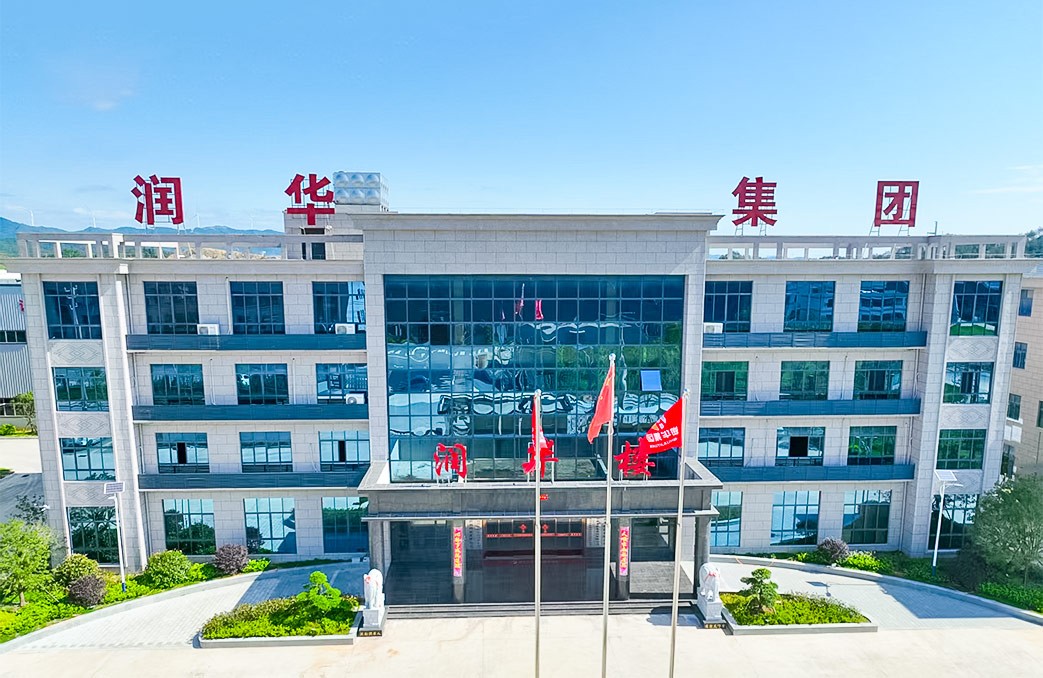
Rough workshops are doomed to fail to meet the demands of The Times. Entering today's Jiangxi Runhua Education Equipment Group is like stepping into a sci-fi scene: on a fully enclosed automated spraying line, mechanical arms move precisely, evenly spraying environmentally friendly water-based paint. "For the same amount, manual painting takes three days and three nights, causing significant pollution and unstable quality." Now, after 90 minutes of going offline, the formaldehyde emission is only 0.05mg/m³, which is far below the national standard. The technical director pointed at the real-time monitoring screen, his tone brimming with pride. Such intelligent workshops have sprung up all over the county. Thirteen leading enterprises have built digital factories, and the automation rate of key processes has exceeded 85%.
The upgrading of industries cannot be achieved without the strategic determination of local decision-makers. Nancheng County has listed the upgrading of school facilities as its "No. 1 project". The county's Party secretary personally led a team to travel north and south to visit the College of Design and Innovation of Tongji University and the Shenzhen Industrial Design Association to learn from them. "Under no circumstances should Nancheng school furniture be trapped in low-end contract manufacturing!" " He made a solemn commitment at the special campaign meeting. Reforms that cut to the core were carried out simultaneously: the "simplified handling of school furniture industry matters" was implemented, and the project approval time was reduced from several months to an average of 15 days. Establish a 200 million yuan industrial upgrading guidance fund to provide real financial subsidies for enterprises' intelligent transformation. The National Quality Supervision and Inspection Center for Educational Equipment Products (Jiangxi) Nancheng Laboratory has been established...
When the dawn light illuminated Ludong Village in Zhuliang Town, the family workshop of Huang Shuigen was already filled with the rumble of machines. Unexpectedly, this small factory with only eight workers is actually a core component supplier for several listed leading enterprises. "We specialize in a small regulator component for chairs. Despite its small size, it requires extremely high precision. There are only a few companies in the entire county that can do it well." " Lao Huang's words exuded technical confidence. Under the idea of delving deeply into niche fields and refining "hidden champions", 230 school-related enterprises in Nancheng have established a closely collaborative and highly specialized industrial ecosystem: from hardware hinges and plastic accessories to wood supply and sponge cutting, the division of labor is meticulous.
This "army of ants" -style industrial cluster effect demonstrated astonishing resilience when the global supply chain was impacted in 2020. "Factories in other places have to suspend production due to the lack of a single part. We can find an alternative supplier locally within half an hour." " Li Shuiliang, the chairman of the leading enterprise Yujia Education Equipment Group, expressed his feelings. The complete industrial chain not only reduces costs but also creates a powerful "magnetic attraction effect", even leading supporting enterprises from Zhejiang and Guangdong to voluntarily move south and settle down.
From "Nancheng Manufacturing" to "Nancheng Solution"
On the computer screen of "post-2000s" designer Zhang Wei, a "Forest Classroom" design that integrates ergonomic and mental healing elements has taken shape astonishingly. This girl who returned to her hometown of Nanxian from Shenzhen is leading her team to participate in the customized bidding for an international school in Shanghai.
In the past, we would follow the style specified by the client. Now, it's us who convince the client through design and define the appearance of the future classroom. Design has become a key tool for Nancheng school furniture to shed its "low-end" label. At present, the county has 5 professional industrial design institutions, which launch over 300 innovative designs each year. Products such as smart height-adjustable desks and vibrating desks for students with hearing impairments have won domestic and international design awards.
The pulse of innovation beats in every detail. In the Century Star Education Equipment exhibition Hall, the sales director is demonstrating "An iot Journey of a Desk" : When students take their seats, the embedded sensors automatically collect their sitting posture data and simultaneously push it to the teachers' terminals and parents' mobile phones. The height of the desk is automatically memorized and adjusted as the child's height increases. It can even monitor the ambient light brightness and link the classroom lights. The desk is no longer a static piece of wood but an educational partner that can "think". In 2023, the export value of intelligent educational equipment products from Nancheng District soared by 47%. In the China-Bangladesh Friendship Primary School in Dhaka, Bangladesh, 5,000 sets of intelligent desks and chairs have become a vivid footnote to the joint construction of the "Belt and Road Initiative".
Although the desks are small, they carry the dreams of millions of rural children to see the world. Zhou Yunchang, the president of the association who has been deeply involved in the industry for 30 years, has his office walls covered with thank-you letters sent by schools from all over the country. What moved him the most was a message from an old teacher in a mountainous area of Yunnan: "In the past, children would write on shaky old desks with their backs bent like shrimps." Now they stand up straight to listen to the class, their eyes shining. In 2023, enterprises in the southern part of the city donated over 100,000 sets of desks and chairs to the central and western regions. The "Sunshine Education Assistance" program has made educational equity a reality.
From the clinking sound of mending table legs to the mechanical roar of smart factories; From the flying wood shavings along the roadsides of Zhuliang Town to an educational equipment network that serves 35% of the country's campuses and radiates to over 40 countries around the world, Nancheng, Jiangxi Province, has spent four decades crafting a legend of a hundred-billion-yuan industry. The people of this land are well aware that the best "school furniture" is not cold wood or steel, but the warmth of the sun that rises with craftsmanship.
When the new generation of people in the southern part of the city infuse the Internet of Things and artificial intelligence into traditional manufacturing, the story of this "small desk" is far from over.
Source: District and County Matters